How to Choose Mobile Dust Collectors by Airflow and Dust Type
Nov.02, 2026
In the realm of industrial cleanliness, selecting the right mobile dust collector can significantly influence both operational efficiency and worker safety. If you’re struggling to find the ideal mobile dust collector that meets your specific dust type and airflow requirements, you're in the right place. Here, I'll outline clear, actionable steps to help you make an informed decision, simplifying the entire process and ensuring you meet regulatory standards.
To begin, understand that the effectiveness of a mobile dust collector hinges on two primary factors: airflow capacity and the type of dust generated by your processes. Let’s break this down into practical steps.
Determining Airflow Requirements
-
Assess Your Work Environment
Evaluate the workspace where the dust collector will be employed. Identify the size of the area and the type of operations you conduct. For example, welding operations may require more airflow than woodworking tasks. -
Calculate Necessary Airflow
Use the formula:
[ \text{Airflow (CFM)} = \frac{\text{Dust Extraction Rate (lbs/hr)}}{0.0050 \text{ (lbs/CFM)}} ]
This calculation allows you to identify the cubic feet per minute (CFM) of airflow needed based on the dust produced. -
Consult Standards
Ensure your airflow meets industry standards. For instance, the American National Standards Institute (ANSI) recommends specific airflow rates for varying dust types. This requirement ensures compliance with safety standards and optimal dust management.
Identifying Dust Types
-
Classify Your Dust
Determine whether the dust generated is combustible, hazardous, or non-hazardous. Different dust types necessitate distinct filtration systems. For example, combustible dusts require explosion-proof collectors compliant with NFPA standards. -
Use Filters Effectively
Depending on the dust class, select the appropriate filter type. HEPA filters are vital for fine dust control, capturing particles up to 0.3 microns with 99.97% efficiency. For larger particles, pre-filters may suffice.
Choosing the Right Mobile Dust Collector
Now that you understand airflow and dust types, it’s time to select a mobile dust collector that meets these specifications.
-
Evaluate Collector Options
Research various models offered by reputable brands like Lufmax. Pay attention to specifications like CFM ratings and filter types. For example, a unit with a 400 CFM airflow capacity might be suitable for light dust, while one rated above 1200 CFM better suits heavy-duty applications. -
Consider Mobility Features
Look for features such as lightweight design, casters for easy transportation, and a compact size if maneuverability is essential in your workspace.
Potential Challenges and Solutions
Choosing the right mobile dust collector can sometimes confront you with hurdles:
-
Inaccurate Dust Estimates
To avoid underestimating dust production, conduct a trial period to measure actual dust levels using tools like dust monitoring devices. -
High Initial Costs
While mobile dust collectors may require an upfront investment, remember that they lead to reduced cleaning time and improved health safety for your workers, providing a return on investment over time.
Tools and Resources
To streamline your selection process:
-
Mobile Dust Collector Sizing Calculator
Use online tools or apps provided by manufacturers to perform quick calculations. -
Industry Guidelines and Compliance Documentation
Reference ASTM and ISO standards for best practices and compliance requirements, ensuring safety and operational efficiency.
Conclusion: Take Action Now
Choosing the right mobile dust collector involves thorough consideration of airflow and dust type. By assessing your work environment, accurately calculating airflow needs, classifying your dust, and selecting a suitable model like the trusted Lufmax collectors, you ensure a safer and cleaner workspace.
To recap:
- Assess your environment.
- Calculate airflow needs.
- Classify the type of dust.
- Research and choose the appropriate mobile dust collector model.
Get started today and improve your operational efficiency. Safe and effective dust control is just a decision away.
For deeper insights and high-performance options, visit Lufmax. You'll find the perfect mobile dust collectors tailored to your needs, like the one shown below.
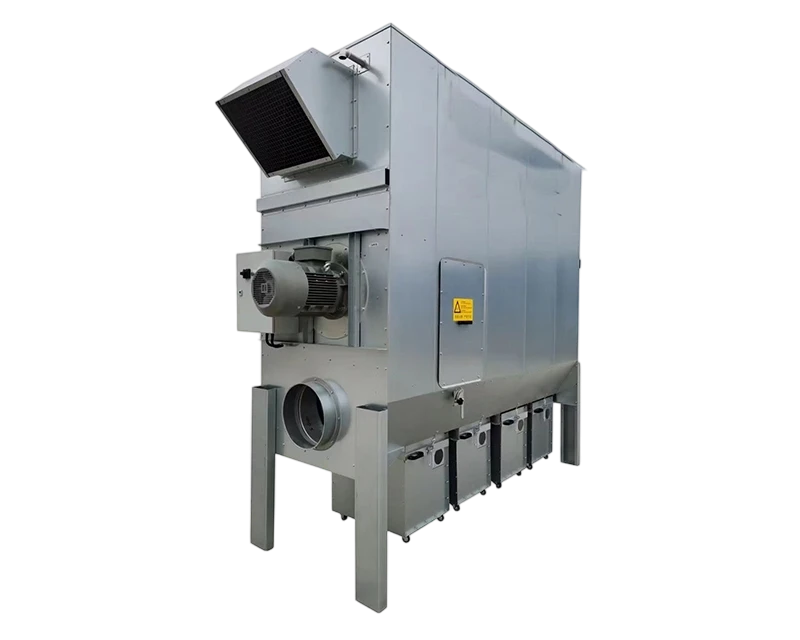
By following these steps, you're not just choosing equipment; you're investing in your business's future and the safety of your workforce.
Latest News
-
Nov.06, 2026
Dust Cabinet Maintenance Tips for Stable Airflow and Filtration
When it comes to maintaining the efficiency of dust cabinets, users often face problems like reduced airflow and poor filtration that can heavily impact the performance of sensitive environments. Regular maintenance not only ensures optimum air quality but can also prolong the lifespan of your equipment. Implementing the right strategies for dust cabinet upkeep can lead to cleaner air and fewer
-
Nov.05, 2026
What Is a Dust Cabinet and When Does a Workshop Need One?
A dust cabinet, also known as a dust containment or dust control cabinet, is a specialized enclosure designed to contain airborne dust and particulate matter generated during various workshop processes. Essential for ensuring a clean and safe working environment, a dust cabinet employs advanced filtration systems, such as HEPA filters, to capture harmful particles, thereby enhancing air quality
-
Nov.04, 2026
How Downdraft Sanding Booths Control Fine Sanding Dust
If you're in the business of woodworking, metalworking, or any craft that involves sanding, you know that controlling fine sanding dust can be a significant challenge. Dust not only impairs visibility but can also lead to health hazards and compliance issues. In this article, I will share clear, actionable methods to effectively manage fine sanding dust using Lufmax Downdraft Sanding Booths.