What Is a Woodworking Shop Dust Collection System?
Nov.16, 2026
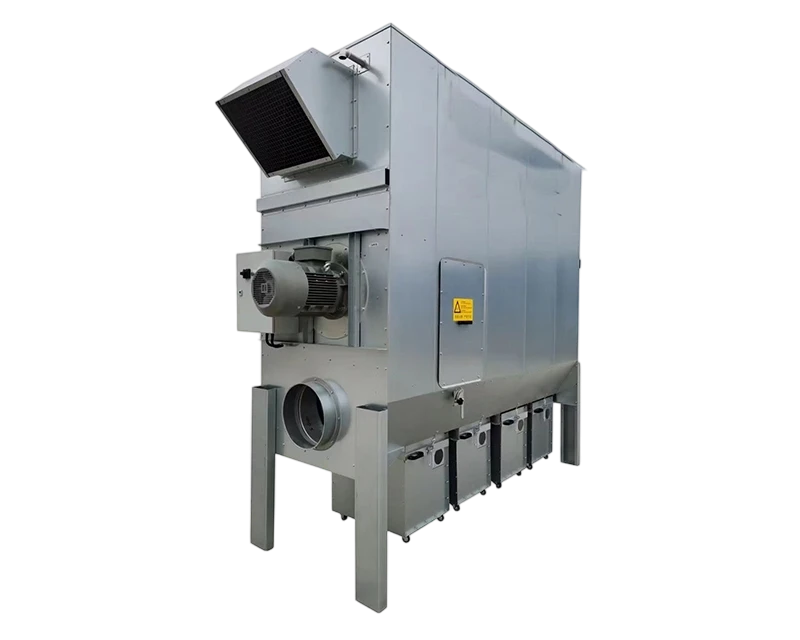
A woodworking shop dust collection system captures wood chips and airborne dust near the machine that produces them, carries that material through ductwork, and separates it into a bin or hopper while filters clean the exhaust air. For a woodworking business, a properly planned system can help control exposure, reduce cleanup time, protect equipment, and keep production areas more orderly. Lufmax can be a starting point for exploring dust collection options, but the right system depends on your machines, layout, materials, and applicable safety requirements.
How a Woodworking Shop Dust Collection System Works
The basic process is straightforward: capture, convey, separate, and filter. A hood or machine port captures dust at its source. A fan creates airflow through the ductwork, carrying chips and fine particles to a separator and filter. Collected material drops into a drum, bin, or hopper, while filtered air is exhausted or, where permitted and properly designed, returned to the workspace.
- Capture: A machine hood or enclosure intercepts dust before it spreads into the room.
- Convey: Ductwork transports dust-laden air. Duct diameter, branch layout, airflow, and static pressure all affect performance.
- Separate: A cyclone or other pre-separator removes much of the heavier material before it reaches the filter.
- Filter: Filter media captures finer particles. A differential-pressure gauge can help indicate when a filter needs attention.
- Collect and dispose: Chips and dust enter a container that should be emptied safely and on a suitable schedule.
In practice, the system works as a network, not just as a collector. A powerful fan cannot compensate for poorly designed hoods, leaks, blocked filters, or duct branches that do not deliver the required airflow.
Why Dust Collection Became Essential in Woodworking
As woodworking shops adopted faster machinery and more production lines, the volume of chips and fine dust increased. Early approaches often relied on sweeping and general room ventilation. Modern local exhaust ventilation instead aims to capture contaminants close to the cutting, sanding, or routing point, before they disperse into a worker’s breathing zone or settle on equipment.
That shift matters because wood dust is not only a housekeeping issue. Fine airborne particles can affect respiratory health, while accumulated combustible dust can create a fire or explosion hazard under the right conditions. The specific risks depend on the wood, process, dust characteristics, collector design, and facility conditions. A qualified industrial ventilation or fire-protection professional can help assess a site-specific installation.
Practical Value for a Woodworking Business
A well-designed woodworking shop dust collection system supports day-to-day operations as well as workplace safety. It can reduce time spent cleaning surfaces, help keep machine beds and sensors clearer, and make it easier to maintain consistent production conditions. Capturing dust at the source can also reduce the amount that migrates into storage areas, offices, and finished-product zones.
- Cleaner production areas: Source capture limits the spread of chips and fine dust.
- More efficient housekeeping: Less settled material can mean fewer interruptions for cleanup.
- Equipment protection: Controlling dust around motors, bearings, controls, and optical sensors can support maintenance routines.
- Risk management: A system designed for the materials and processes in use is one part of a broader exposure, fire, and combustible-dust control plan.
- Better process visibility: Airflow readings and filter-pressure trends can help identify problems before collection performance declines.
How to Plan a Woodworking Shop Dust Collection System
Before selecting equipment, map the process and calculate the system requirements. Do not choose a collector based only on the largest advertised horsepower or a single airflow figure. Actual performance depends on the complete system, including machine connections, duct losses, filter condition, and whether several machines operate at the same time.
1. List machines and operating conditions
Record every dust-producing machine, its port size, the manufacturer’s airflow recommendation, and whether it runs continuously or intermittently. Note which machines may operate simultaneously. A four-machine shop, for example, should not assume that the combined airflow demand is simply the sum of every machine’s maximum rating; the design needs to reflect the actual operating plan and applicable capture requirements.
2. Design hoods and ductwork
Use effective machine hoods and short, well-planned duct runs where possible. Duct sizing must balance airflow, conveying velocity, pressure loss, noise, and the material being transported. Excessive bends, abrupt transitions, undersized branches, and open unused gates can undermine collection. Have the design checked by a qualified ventilation professional when the system is complex or serves multiple production areas.
3. Match the collector and filter to the application
Compare the collector’s performance at the system’s required airflow and static pressure—not just its free-air rating. Check filter area, cleaning method, dust-bin capacity, fan and motor suitability, and whether the collected material requires special handling. Ask suppliers, including Lufmax when reviewing its available options, for the operating curve, filter specifications, installation requirements, and maintenance instructions for the exact model under consideration.
4. Commission and document the system
After installation, verify airflow and static pressure at relevant branches and machine hoods under defined operating conditions. A practical commissioning plan can include a 100% check of every machine connection, recording baseline readings, and confirming that gates, seals, and filter-cleaning mechanisms work. Treat those figures as a suggested inspection scope, not as a universal performance guarantee. Keep the readings so later checks can identify meaningful changes.
Standards, Testing, and Evidence to Review
Standards help define safe design and testing practices, but a standard name alone does not prove that a particular collector will work in a particular shop. For local exhaust ventilation design principles, review the applicable edition of ANSI/ASSP Z9.2. For combustible-dust hazards, NFPA 660 addresses combustible dusts and particulate solids; confirm the adopted edition and local requirements with the authority having jurisdiction. OSHA requirements, including applicable exposure and ventilation rules, should also be evaluated for the facility and process.
When a supplier makes filter-performance claims, ask which test method and conditions support them. ISO 16890-1 classifies general ventilation air filters; it should not, by itself, be treated as proof of complete woodworking collector performance or as a substitute for system-level airflow and emissions data. Request documented test conditions, pressure-drop information, particle-size performance where relevant, and the exact filter model. For an installed system, compare measured airflow and static pressure with the design basis and keep a dated record.
| What to review | Why it matters | Useful evidence |
|---|---|---|
| Airflow and static pressure | Shows whether the installed network is operating near its design point | Commissioning readings at machine branches and collector |
| Filter performance | Helps determine whether media suits the particle size and operating conditions | Identified test method, test conditions, and filter data sheet |
| Combustible-dust controls | Addresses hazards created by combustible particulate materials | Site-specific hazard assessment and applicable NFPA 660 review |
| Maintenance condition | Clogging, leaks, and full bins can reduce collection performance | Inspection log, differential-pressure trend, and service records |
Common Dust Collection Misconceptions
“A bigger motor automatically means better collection.”
Not necessarily. Fan performance depends on airflow at a given static pressure. Poor duct design, restrictive filters, leakage, or ineffective hoods can prevent a high-powered unit from capturing dust where it is produced.
“A shop vacuum is the same as a central collector.”
Small extractors can suit certain portable tools, but they are not automatically appropriate for multiple fixed machines or high-volume chip production. Compare the required airflow, duty cycle, filter design, and intended application.
“If the floor looks clean, the air is clean.”
Visible chips and settled dust do not show how much fine dust remains airborne. Use suitable exposure-assessment methods and professional guidance when evaluating worker exposure; appearance alone is not a measurement.
“A filter rating guarantees the whole system’s performance.”
Filter media is only one component. Hood capture, duct transport, seals, airflow, filter loading, and safe dust disposal all affect results. Evaluate the complete woodworking shop dust collection system.
“Collected wood dust is harmless once it is inside the bin.”
Collection does not eliminate fire or combustible-dust concerns. Use appropriate handling, housekeeping, grounding or bonding where required by the design, and site-specific hazard controls. Do not improvise modifications to a collector or duct system.
Example: Improving Collection in a Small Production Shop
Consider a hypothetical shop with a table saw, planer, jointer, and sander. Operators report dust escaping near the planer and frequent filter cleaning. Rather than replacing the collector immediately, the shop documents which machines run together, checks for open branches and duct leaks, and records airflow and static pressure at each connection. The inspection finds that one branch gate is not closing fully and that the filter’s pressure drop has increased from its clean baseline.
The shop repairs the gate, services the filter according to the manufacturer’s instructions, and repeats the measurements under the same operating conditions. It then compares the readings with the system’s design requirements and schedules follow-up checks. This example does not promise a particular airflow improvement; it shows why measurement, maintenance, and system-level troubleshooting are more reliable than guessing from motor size alone.
Maintenance Checklist
- Inspect machine hoods, flex connections, duct joints, and blast gates for damage, blockage, or leakage.
- Check the collector’s differential-pressure indicator against its clean-filter baseline.
- Follow the manufacturer’s instructions for filter cleaning and replacement.
- Empty collection containers before they become overfilled, using safe handling procedures.
- Record airflow or static-pressure readings at planned intervals and after system changes.
- Review dust hazards when adding machinery, changing materials, or increasing production.
Choosing a System with Lufmax in Mind
When evaluating Lufmax or another supplier, start with your documented requirements rather than a product headline. Ask for model-specific airflow and static-pressure data, filter details, recommended applications, installation guidance, and maintenance procedures. Confirm what is included in the quotation and whether the supplier can support layout review or commissioning. The final selection should be validated against your shop conditions and applicable regulations by competent professionals.
Key Takeaways
A woodworking shop dust collection system captures dust at the source, conveys it through ductwork, and separates and filters the material. Its real-world value depends on correct hood design, airflow, duct sizing, filter selection, commissioning, and maintenance—not on one specification alone. Use documented measurements, review relevant standards such as ANSI/ASSP Z9.2 and NFPA 660, and assess the complete installation before making a purchase or modification. Map your machines, record your requirements, and use those facts to guide your next conversation with Lufmax or a qualified dust-collection professional.
Latest News
-
Nov.20, 2026
How to Reduce Dust Collection System Operating Costs
This Lufmax guide explains how to Reduce Dust Collection System Operating Costs through a measured audit, airflow optimization, leak control, filter and compressed-air management, and ongoing verification—without compromising capture or safety.
-
Nov.19, 2026
What Is an Industrial Dust Collector?
An industrial dust collector captures airborne dust at workstations and production equipment. Learn how the system works, where it is used, how to select one, and what to ask an industrial dust collector manufacturer.
-
Nov.18, 2026
Portable Dust Collection System Buying Guide
This Portable Dust Collection System Buying Guide explains how to assess dust hazards, size a collector, compare filtration and mobility, and verify performance when evaluating Lufmax options.