Small and Medium-Sized Furniture Factories
Oct.21, 2026
Small and medium-sized enterprises (SMEs) often struggle with skyrocketing electricity bills caused by dust extraction systems running at full power all day, which directly eats into their slim profit margins. Furthermore, outdated equipment leads to frequent filter clogs and inconsistent suction, forcing workers to stop production for manual cleaning and severely impacting overall efficiency.
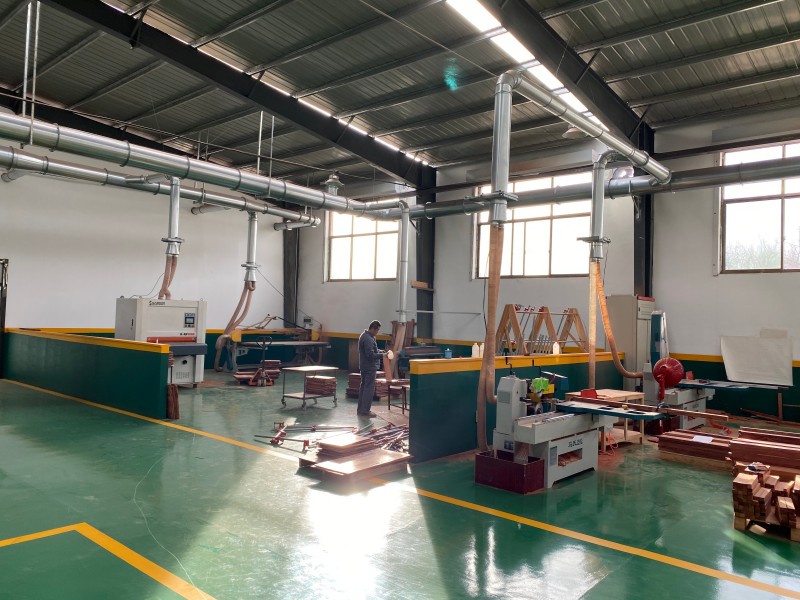
To address these challenges, LUFMAX offers a smarter solution: our adaptive VFD (Variable Frequency Drive) technology allows suction to sync automatically with your machinery, cutting energy costs by up to 40%. Combined with industrial-grade pulse-jet cleaning, the system maintains powerful, consistent suction while eliminating the need for tedious manual maintenance. With our compact, all-in-one design and standalone mobile dust collectors, we provide a flexible configuration that significantly relieves capital pressure, rapidly improves the production environment, and elevates final product quality.
Common Dust Collection Challenges in Small Woodworking Shops
| Workshop Challenge | Recommended Consideration |
|---|---|
| Limited installation space | Evaluate compact equipment dimensions, access for maintenance and available floor space |
| One or two machines in operation | Consider a mobile dust collector with suitable airflow and connection sizes |
| Several machines operating together | Assess whether a fixed collector or centralized system is more appropriate |
| Changing machine utilization | Match extraction capacity to the machines operating simultaneously |
| Fine sanding dust | Select suitable filtration and consider a dedicated sanding workstation where appropriate |
| Frequent filter cleaning | Evaluate filter cleaning methods, dust storage capacity and maintenance access |
| Growing production capacity | Consider additional extraction points, ductwork and future equipment requirements |
A small workshop does not necessarily require a large centralized system. The appropriate configuration depends on the number of machines, required airflow, dust characteristics and production schedule.
Choosing the Right Dust Collector for Your Workshop
Mobile Dust Collectors for Individual Machines
A mobile dust collector is a practical option for small woodworking shops with limited machinery or workstations that change frequently. Its compact arrangement allows it to be positioned near compatible equipment without requiring a large permanent duct network.
Typical applications include small saws, planers, routers and other woodworking machines with suitable extraction connections.
When selecting a mobile unit, evaluate the machine's required airflow, outlet dimensions, dust type and operating conditions. A portable collector should not be assumed to provide sufficient extraction for every machine simply because its connection fits.
Compact Fixed Dust Collection Systems
A compact fixed collector may be more suitable when several machines occupy permanent positions or when a dedicated extraction arrangement is preferred.
This configuration can provide a more organized installation, with fixed duct connections and convenient access to the filtration and dust collection components. The design should account for the machines that operate simultaneously and the pressure losses throughout the ductwork.
Centralized Dust Extraction for Growing Workshops
When a workshop adds machines or operates multiple production areas, a centralized dust extraction system may become more practical than using separate mobile units.
A centralized configuration connects multiple dust-generating machines through an engineered duct network to shared filtration and dust discharge equipment. Fan capacity, duct dimensions and control arrangements must be selected according to the combined operating requirements.
For workshops planning future expansion, it is worth assessing the anticipated machine list before purchasing individual collectors that may later need to be replaced.
Dust Collection Equipment Selection Guide
| Workshop Setup | Suitable Equipment Type | Key Selection Factors |
|---|---|---|
| One woodworking machine | Mobile dust collector | Required airflow, connection size and dust type |
| Two or more machines used separately | Mobile collector or individual units | Whether the collector can be moved safely and connected conveniently |
| Several fixed machines operating together | Compact fixed or centralized system | Combined airflow demand, duct layout and simultaneous operation |
| Dedicated sanding workstation | Downdraft sanding booth | Workpiece dimensions, airflow coverage and fine-dust filtration |
| Expanding furniture workshop | Scalable centralized extraction system | Additional machines, available installation space and future airflow demand |
The final selection should be based on machine specifications and actual operating conditions rather than workshop size alone.
Key Factors When Selecting a Small Wood Shop Dust Collection System
Airflow and Machine Compatibility
Start by identifying the extraction requirements of each machine. CNC routers, panel saws, planers and sanders can have different airflow and static-pressure requirements.
For a multi-machine system, calculate the demand based on the machines expected to operate simultaneously. A collector's advertised airflow under unrestricted conditions may not represent the airflow available after connecting ductwork, bends, branches and filters.
Filtration and Dust Characteristics
Wood chips, shavings and fine sanding dust require suitable collection and filtration arrangements. Filter media and cleaning methods should be selected according to the material being processed, dust loading and required maintenance schedule.
For MDF and other engineered wood products, evaluate the relevant dust hazards and applicable workplace requirements before finalizing the system design.
Installation and Workshop Layout
Available floor space, ceiling height, machine locations and duct routing affect equipment selection. A mobile collector can simplify installation for an individual machine, while fixed or centralized systems require more detailed planning.
Maintenance access should also be considered so filters, collection bins and other serviceable components can be inspected without unnecessarily disrupting production.
Energy Consumption and Operating Costs
Fan energy consumption depends on motor power, operating hours, airflow demand and system resistance. In workshops where machine utilization varies, suitable variable-frequency control or staged fan operation may help reduce unnecessary energy use.
Actual savings depend on the selected equipment and operating profile. Equipment capacity should not be reduced below the level required for effective dust extraction.
Maintenance and Dust Disposal
Routine maintenance may include checking filters, cleaning collection areas, emptying dust bins and inspecting duct connections. A system with convenient access to serviceable components can make these tasks easier to manage.
Wood dust can present fire and combustible-dust hazards. Dust accumulation, ignition sources and required protection measures should be evaluated according to the material and applicable safety requirements.
Customized Dust Collection Solutions for Small Furniture Factories
LUFMAX can evaluate your workshop requirements using the following information.
| Parameter | Information to Provide |
|---|---|
| Workshop type | Furniture manufacturing, cabinetry, joinery or general woodworking |
| Machine list | Saws, CNC routers, planers, sanders, drills and other equipment |
| Number of machines | Total machines requiring extraction |
| Operating schedule | Which machines run simultaneously and for how long |
| Dust type | Wood chips, shavings, MDF dust or fine sanding dust |
| Extraction connections | Machine outlet dimensions and required airflow, where available |
| Workshop layout | Machine positions, available space and possible duct routes |
| Electrical conditions | Available power supply and installation requirements |
| Maintenance preferences | Filter cleaning method and dust collection capacity |
| Future expansion | Planned machines and expected changes in production demand |
These details help determine whether a mobile collector, compact fixed unit or centralized dust extraction system is the most suitable option.
Small Wood Shop Dust Collection Solutions from LUFMAX
LUFMAX provides woodworking dust collection equipment for small workshops and medium-sized furniture factories, including mobile dust collectors, centralized extraction systems and dedicated sanding dust collection workstations.
Whether you need dust collection for a single woodworking machine or a system serving several production areas, the configuration should match your machinery, dust characteristics, available space and operating requirements.
Share your machine list, workshop layout and production schedule with LUFMAX to discuss a suitable small wood shop dust collection solution.
-
Next:
None
Latest News
-
Oct.12, 2026
Cabinet Dust Collector Review: Best Uses and Limitations
Are you a woodworker struggling with airborne dust particles that affect both your health and project quality? Enter the Lufmax cabinet dust collector. This innovative device is designed specifically for woodworking professionals and hobbyists who encounter excessive dust and debris during their activities. By providing a comprehensive solution to dust collection, the Lufmax ensures a cleaner
-
Oct.08, 2026
Pros and Cons of a Dry Spray Booth for Furniture Finishing
In today’s competitive furniture manufacturing landscape, the choice of finishing equipment significantly influences product quality and production efficiency. Many woodworkers and furniture manufacturers face challenges with traditional finishing methods, including prolonged drying times and inconsistent finishes, leading to high defect rates. A dry spray booth presents a solution that could
-
Sep.28, 2026
What Is a Water Wash Paint Booth and How Does It Work?
A water wash paint booth is an industrial system designed for the efficient and eco-friendly painting of various surfaces, primarily used in the automotive and manufacturing industries. Unlike traditional paint booths that rely on chemical solvents, a water wash paint booth utilizes water as the primary medium for capturing overspray and contaminants, ensuring a cleaner environment and higher