VOC Treatment & Air Pollution Control Sustainable Compliance and Emission Management Technologies
Oct.08, 2026
Industry Pain Points: The "Compliance" Crisis
01Regulatory Shutdowns
Environmental laws are tightening globally. The Pain: Failure to meet local VOC emission standards can lead to immediate factory closure and massive legal fines.
02Neighborhood Complaints
Odors from solvent-based paints trigger complaints from nearby residents. The Pain: Damaged corporate reputation and constant inspections from environmental agencies.
03Inconsistent Air Quality
Poor exhaust management causes chemical vapors to linger. The Pain: "Tacky" finishes and solvent entrapment that ruin high-end furniture surfaces.
04Sky-High Energy Costs
Heating replacement air and running traditional scrubbers is expensive. The Pain: VOC treatment becomes a "money pit" that eats into your thin manufacturing margins.
05Safety & Fire Hazards
High concentrations of flammable solvent vapors in ducts. The Pain: Increased insurance premiums and the constant threat of a fire in the exhaust system.
Industry Focus & Core Objectives
LUFMAX provides customized VOC Treatment System solutions for industrial spray painting facilities, furniture coating lines, woodworking factories, and other manufacturing processes that generate volatile organic compound emissions.
Industrial coating, solvent application, adhesive bonding, and surface finishing operations can release VOCs such as toluene, xylene, ethyl acetate, and other organic vapors. Without effective exhaust collection and treatment, these emissions may affect workplace air quality, create odor problems, and increase environmental compliance challenges.
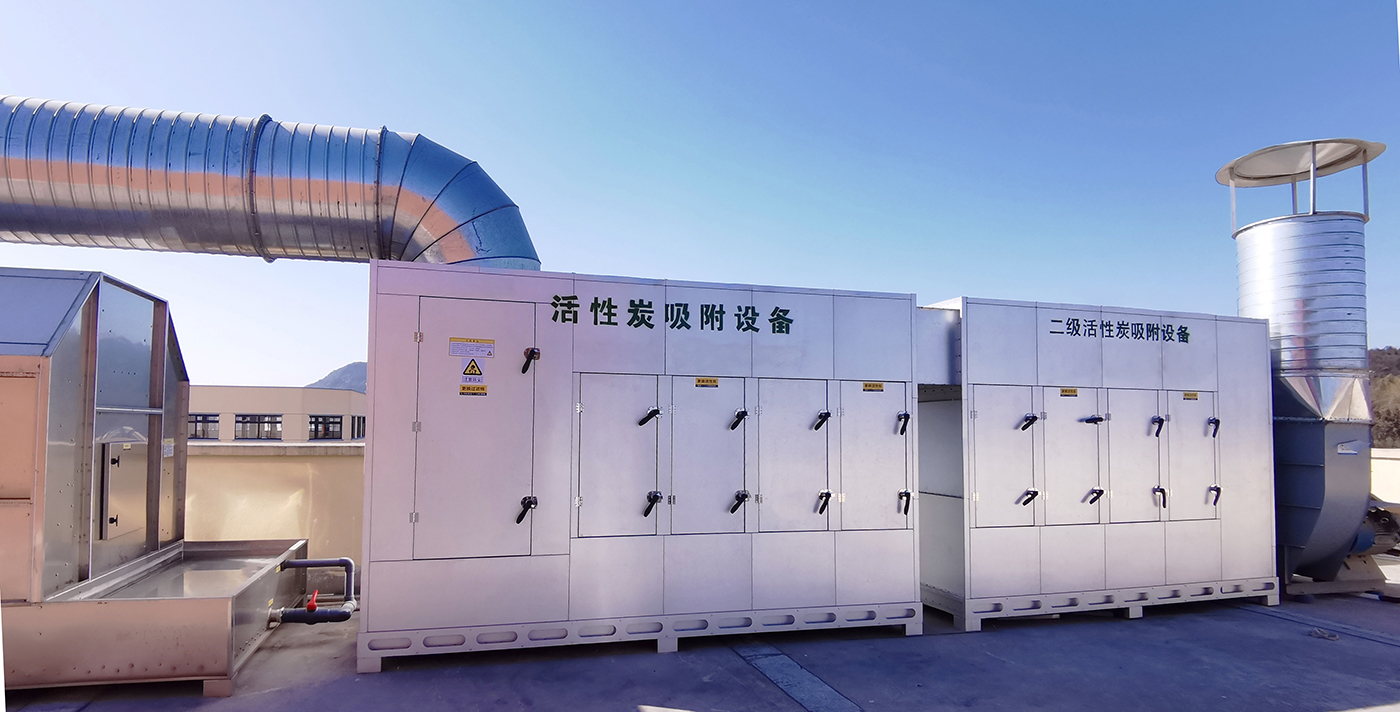
Our industrial VOC treatment solutions integrate exhaust gas collection, particulate pre-filtration, activated carbon adsorption, and application-specific oxidation or concentration technologies. Depending on the exhaust characteristics, the treatment process can be configured to support different airflow volumes, VOC concentrations, production schedules, and emission control requirements.
LUFMAX focuses on integrating VOC emission control with industrial spray booths and coating production systems to help manufacturers establish practical, maintainable exhaust treatment processes.
Primary Objective: To neutralize Volatile Organic Compounds (VOCs) and hazardous air pollutants (HAPs), ensuring 100% legal compliance and a scent-free facility.
Common VOC Emission Challenges in Industrial Manufacturing
Industrial VOC emissions vary significantly according to the coating materials, solvents, operating temperatures, and manufacturing processes.
|
Industrial Challenge |
Operational Impact |
Recommended Solution Direction |
|---|---|---|
|
Solvent-Based Paint Emissions |
VOC releases during painting and drying |
Source extraction and appropriate VOC treatment |
|
Large Exhaust Air Volumes |
High treatment energy and equipment costs |
Concentration or optimized exhaust management where applicable |
|
Low VOC Concentrations |
Difficulty selecting cost-effective treatment |
Activated carbon adsorption or concentration systems |
|
Fluctuating VOC Loads |
Variable treatment performance |
Appropriate process controls and system sizing |
|
Paint Mist Contamination |
Fouling of adsorption media or treatment equipment |
Efficient paint overspray pre-filtration |
|
Odor Complaints |
Impact on surrounding facilities and communities |
Treatment selected for the responsible odor compounds |
|
Flammable Solvent Vapors |
Fire and explosion hazards |
Hazard assessment and engineered safety controls |
A well-designed VOC emission control system should address both the chemical characteristics of the exhaust stream and the operating requirements of the production facility.
Application Scenarios
Large-Scale Spraying Workshops: Handling high volumes of solvent-based lacquers and thinners.
Automated UV Coating Lines: Managing specialized chemical emissions.
Adhesive & Glue Application: Capturing vapors from bonding processes.
Chemical Mixing Rooms: Dedicated ventilation for volatile material storage.
How to Select the Right VOC Treatment System
An effective VOC treatment system must be designed according to the actual exhaust characteristics and production requirements.
|
Design Parameter |
Information Required |
Why It Matters |
|---|---|---|
|
Exhaust Airflow |
m³/h or Nm³/h |
Determines treatment capacity |
|
VOC Concentration |
mg/m³ or ppm, with measurement conditions |
Influences technology selection and VOC mass loading |
|
VOC Composition |
Solvent types and approximate proportions |
Determines adsorption or oxidation compatibility |
|
Exhaust Temperature |
Normal and maximum temperatures |
Affects media performance and thermal design |
|
Humidity |
Relative humidity or moisture content |
Can affect adsorption capacity |
|
Particulate Loading |
Paint mist, dust and aerosols |
Determines pre-treatment requirements |
|
Operating Hours |
Daily hours and operating days |
Influences energy use and maintenance costs |
|
Emission Requirements |
Local limits and measurement conditions |
Establishes treatment objectives |
|
Installation Space |
Equipment area and ductwork layout |
Affects system configuration |
Important Engineering Consideration
For VOC treatment projects, exhaust airflow and concentration should be evaluated together to understand the total pollutant loading.
A facility with a large exhaust volume and low VOC concentration may require a different technology from a facility with a smaller but more concentrated exhaust stream.
LUFMAX can use the provided exhaust conditions to help evaluate an appropriate treatment configuration for spray painting and industrial coating applications.
Integrating VOC Treatment with Industrial Spray Booths
VOC treatment is especially important in facilities using solvent-based coatings, primers, lacquers, and cleaning agents.
However, paint overspray filtration and VOC treatment perform different functions:
-
Paint mist filtration captures liquid droplets and particulate overspray.
-
VOC treatment addresses gaseous organic compounds in the exhaust stream.
A complete spray painting exhaust management solution may therefore require both systems.
Dry Filtration Spray Booth Integration
Dry filters capture paint overspray before the remaining exhaust reaches downstream VOC treatment equipment. Suitable gas treatment can then be selected according to the solvent composition and concentration.
Water Wash Spray Booth Integration
Water curtain systems collect paint mist through a circulating water process. Additional VOC treatment may be necessary for solvent-based coating operations because the water curtain alone does not reliably remove all gaseous organic compounds.
Centralized Coating Line Exhaust
Facilities with multiple spraying and drying stations may benefit from coordinated ductwork, source segregation, and appropriately sized central VOC treatment equipment.
Integrated Solution Workflow
01Vapor Collection:
High-efficiency hoods and ductwork capture solvent fumes at the source.
02Pre-Filtration:
Removing any remaining paint mist or particulates to protect the core VOC treatment unit.
03Adsorption/Neutralization:
Using Activated Carbon or RTO/RCO technologies to trap or burn VOCs.
04Desorption & Recovery:
(Optional) Concentrating VOCs for more efficient disposal.
05Safe Discharge:
Clean, odor-free air is exhausted through a compliant stack.
-

Core System Components
Activated Carbon Adsorption Towers: The industry standard for capturing benzene-series and other organic solvents.
Honeycomb Zeolite Rotors: High-end technology for concentrating low-concentration, large-volume VOC streams.
Catalytic Oxidizers (RCO/RTO): For destroying VOCs at high temperatures with heat recovery options.
Dry & Wet Scrubbers: To neutralize acidic gases or water-soluble chemical vapors.
VOC Real-time Monitoring: Sensors and smart dashboards that provide proof of compliance to authorities 24/7.
-

Customization & "Thinking Ahead"
Energy-Optimized Exhaust: Variable speed drives that sync with your spray booths to reduce unnecessary airflow.
Hybrid Filtration: Combining particulate and gas filtration into a single, space-saving unit.
Heat Recovery Integration: Using the heat generated from VOC oxidation to warm your factory or curing ovens.
Compliance & Standards
Global Emission Standards: Designed to exceed EPA (USA), EU Industrial Emissions Directive, and national clean air acts.
Explosion-Proof Safety: Full system grounding and ATEX/NFPA-rated components for handling flammable gas mixtures.
Contact LUFMAX for VOC Treatment System Consultation and a Customized Quotation.